
The Reactive Patching Trap
Every engineering leader knows the dread of the mid-week critical vulnerability announcement. When authoritative bodies like the Cybersecurity and Infrastructure Security Agency (CISA) release urgent advisories, or when major ecosystem maintainers like Google publish security updates, the standard organizational response is often a chaotic fire drill. Teams drop their active sprints, security analysts scramble to identify affected assets, and developers rush out patches without adequate regression testing.
This reactive posture is unsustainable. It degrades developer velocity, introduces operational risk, and fails to address the systemic root causes of software insecurity. In my experience advising and leading engineering organizations, the solution is not to demand faster manual patching, but to build platform-level mechanisms that ingest threat intelligence and automatically enforce secure-by-default guardrails.
I want to outline how you can transition your organization from reactive firefighting to a proactive, platform-centric model of vulnerability management. By integrating authoritative threat intelligence directly into your platform engineering workflows, you can neutralize threats before they disrupt your roadmap.
Operationalizing Threat Intelligence via Automated Policy
To move beyond manual triage, you must automate how your organization ingests and acts upon threat intelligence. CISA’s Known Exploited Vulnerabilities (KEV) catalog is the gold standard for prioritizing threats because it focuses exclusively on vulnerabilities that are actively being exploited in the wild. If a vulnerability is in the KEV, it represents an immediate risk; if it is not, you can generally afford to address it through standard patch cycles.
Rather than relying on security teams to manually monitor these feeds and send emails, you should treat threat intelligence as structured data. I recommend building automated pipelines that ingest the KEV JSON feed and map it against your active software bill of materials (SBOM) inventory.
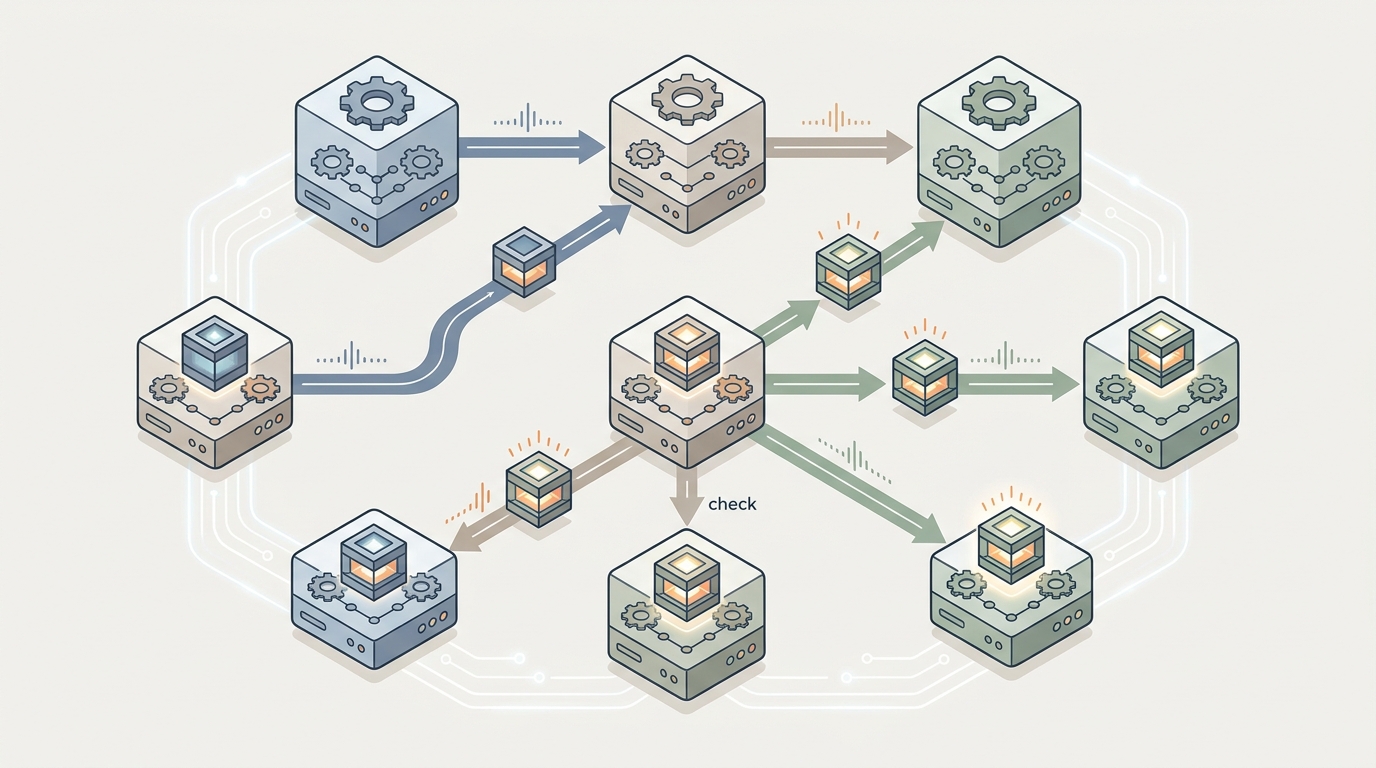
Once you have this mapping, you can enforce deployment policies at the API gateway or admission controller level. Instead of asking developers to check their dependencies, your deployment pipeline should reject container images that contain active KEV vulnerabilities. This shifts the operational burden from human vigilance to automated infrastructure.
Building Secure-by-Default Guardrails
Shifting security "left" is a common industry phrase, but in practice, it often means dumping security responsibilities onto already overburdened developers. A more effective strategy is to build "paved roads"—pre-configured, secure-by-default templates, base images, and API frameworks designed by platform teams.
When Google or other major platform operators update their development frameworks, they frequently introduce secure defaults that eliminate entire classes of vulnerabilities (such as cross-site scripting or SQL injection) at the compiler or framework level. Your platform engineering team should curate these upstream updates and distribute them as internal base images and libraries.
By ensuring that your internal frameworks automatically handle input validation, secure session management, and transport layer security, you protect your developers from making common implementation mistakes. The goal is to make the secure path the path of least resistance.
Implementing a Pragmatic Vulnerability Response Pipeline
To implement this strategy, you need a clear policy engine that evaluates container images during the Continuous Integration and Continuous Deployment (CI/CD) phase. Below is a practical Open Policy Agent (OPA) Rego policy that I have used to block deployments containing vulnerabilities identified in the CISA KEV catalog.
package kubernetes.admission

deny[msg] {
    input.request.kind.kind == "Deployment"
    container := input.request.object.spec.template.spec.containers[_]
    image := container.image

    # Query your internal vulnerability database populated by CISA KEV data
    vuln := data.images[image].vulnerabilities[_]
    vuln.is_cisa_kev == true

    msg := sprintf("Deployment blocked: Image %v contains active CISA KEV vulnerability %v", [image, vuln.id])
}
To complement this automated enforcement, you must establish a clear prioritization matrix. Not all vulnerabilities require the same level of urgency. I recommend using a structured framework to determine response SLAs, ensuring your engineering team only interrupts active sprints for true emergencies.
| Severity Class | CISA KEV Status | Exposure Profile | SLA for Mitigation | Action Required |
|---|---|---|---|---|
| Critical | Active | Public-Facing | 24 Hours | Immediate hotpatch or network isolation |
| High / Critical | Active | Internal Only | 72 Hours | Platform-level mitigation or patching |
| High | Potential | Public-Facing | 7 Days | Scheduled dependency update |
| Medium / Low | No | Any | Next Sprint | Standard release cycle update |
Implementation Trade-offs and Next Steps
Transitioning to this model is not without friction. Blocking builds based on KEV status can break deployment pipelines during critical releases if a dependency is flagged. To mitigate this risk, I recommend implementing a temporary bypass mechanism (such as signed policy exceptions with a hard expiration date) to allow critical business logic updates to proceed while a patch is being developed.
My recommendation is to start small: configure your CI/CD pipeline to ingest the CISA KEV catalog, map it against your critical public-facing applications, and implement an admission controller policy to block active exploits. Once this pipeline is stable, you can expand it to cover your entire application portfolio, turning security from a reactive bottleneck into a silent, automated guardrail.