
The Evolution of Agentic Security in the Enterprise
The integration of autonomous AI coding agents into developer workflows has shifted how software is built. Tools like Claude Code automate code generation, file modifications, local debugging, and infrastructure updates. However, this shift introduces security and operational challenges. Developers using local command-line interfaces (CLIs) or IDE extensions have historically stored long-lived cloud credentials or API keys on local machines. This decentralized approach creates vulnerable endpoints, increasing risks of credential exposure, runaway API costs, and a lack of centralized auditability.
To address these vulnerabilities, AWS has launched the self-hosted Claude Apps Gateway for AWS, as announced in their official AWS Machine Learning Blog on July 8, 2026. This open-source, self-hosted solution acts as a secure intermediary between local developer environments and Amazon Bedrock. By routing requests through this internal proxy, organizations maintain complete control over how LLM-powered assistants access internal codebases and process proprietary data. Shifting from local credentials to a centralized gateway allows security teams to enforce enterprise-grade governance without hindering developer velocity.
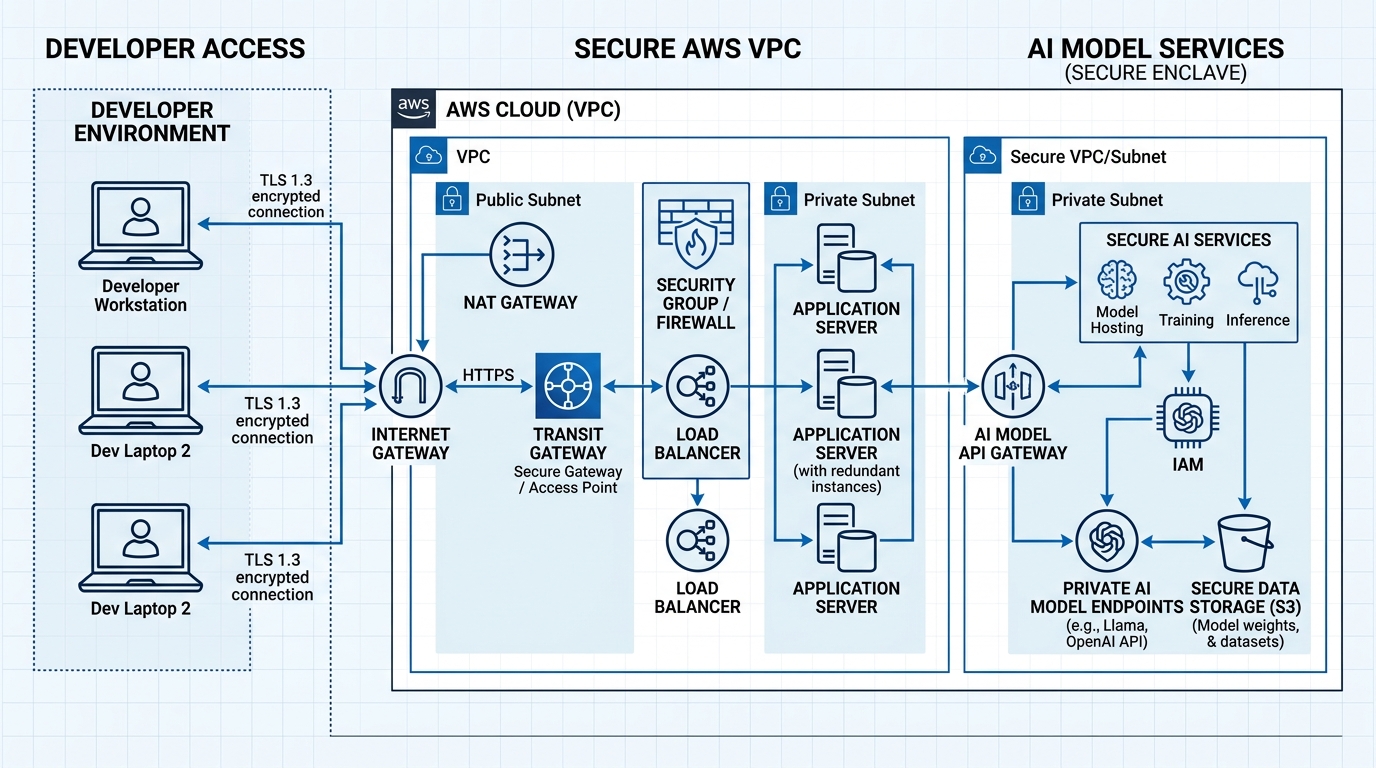
Architecture and Network Routing within the VPC
The Claude Apps Gateway for AWS is deployed as a self-hosted infrastructure stack directly within an organization’s Virtual Private Cloud (VPC). This architecture ensures that network traffic passing between developer terminals, coding agents, and the underlying foundational models remains entirely within the enterprise's managed security boundary. Rather than routing raw API requests directly to external public endpoints, developers configure their local CLI tools to point to the internal gateway's secure endpoint.
Mitigating Local Secret Leakage via OIDC SSO
A primary security threat vector in agentic software development is the proliferation of long-lived credentials. When coding agents require programmatic access to cloud resources or LLM APIs, developers often store static AWS Identity and Access Management (IAM) access keys or external API keys in local dotfiles or system environment variables. If a developer's machine is compromised, or if these keys are inadvertently committed to public version control repositories, the entire enterprise environment is put at risk.
The Claude Apps Gateway mitigates this risk by integrating with OpenID Connect (OIDC) Single Sign-On (SSO) identity providers. Instead of relying on static credentials, developers authenticate directly through their organization's existing identity provider. The gateway validates the user's active session and generates temporary, short-lived tokens to session-based coding agents. As detailed by Help Net Security, this architecture ensures that sensitive credentials are never stored locally on developer hardware, aligning agent-driven software engineering with Zero Trust security standards.
Fine-Grained Cost Management and Telemetry Logging
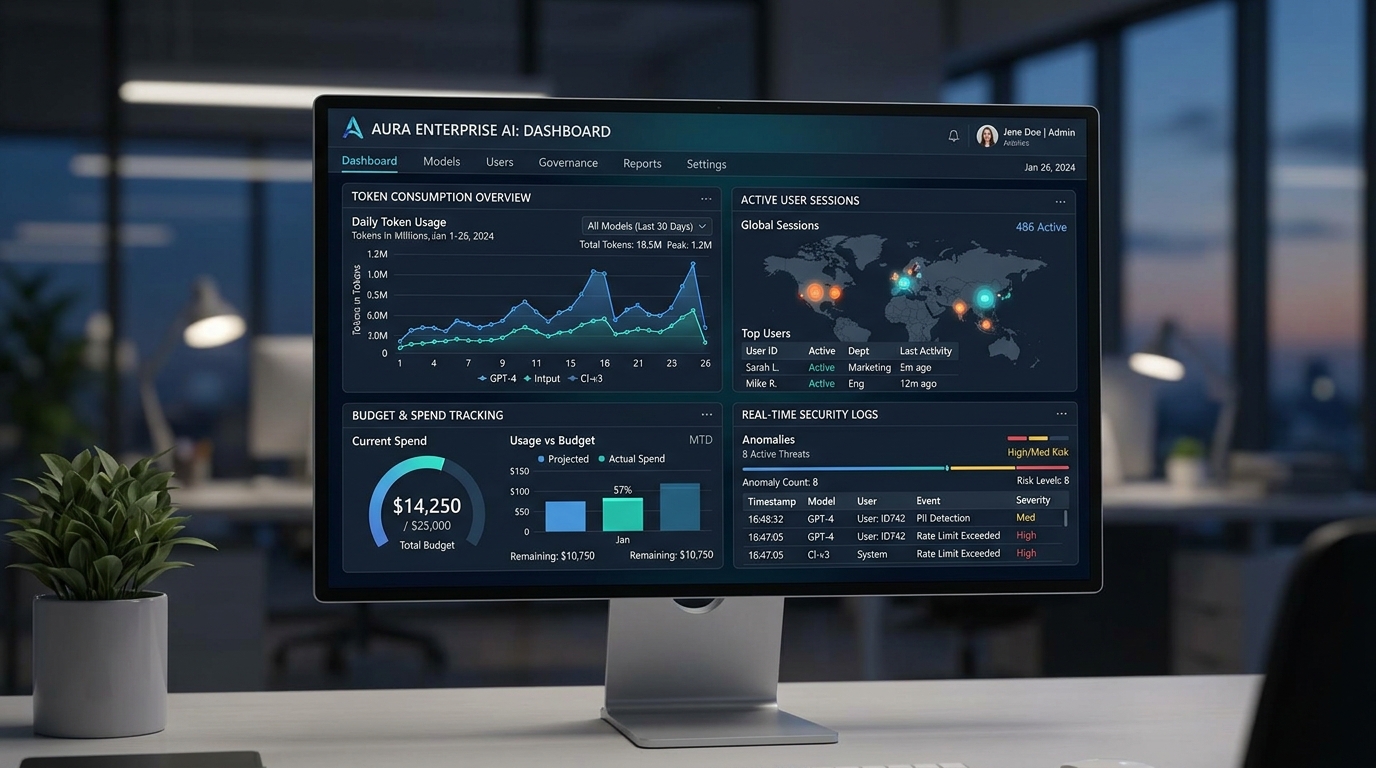
Administrators can configure budgets and spending limits at key levels. Global limits establish hard ceilings on daily or monthly model usage across the entire organization. Team and project caps allocate specific budgets to particular departments or code repositories, preventing a single system from monopolizing shared resources. Finally, individual developer quotas constrain API usage to encourage efficient prompting and prevent infinite loops in agent execution.
Simultaneously, the gateway serves as a centralized telemetry hub. It logs every API transaction, capturing input and output tokens, metadata, user identities, and latency metrics. This raw telemetry data is streamed directly to Amazon CloudWatch or external Security Information and Event Management (SIEM) systems. Consequently, compliance teams can easily audit the exact modifications proposed by the agents and identify the specific developers who authorized them.
Conclusion
AWS Claude Apps Gateway gives enterprises a practical control point for AI coding agents. OIDC-based access, centralized telemetry, and enforceable spending limits reduce credential risk and improve accountability while preserving developer access to Amazon Bedrock.